

Fire Door
Knowledge Centre
Practical Fire Door Guidance. Technical Knowledge. Continuous Learning.
Welcome to the Proudman Fire Technical Knowledge Centre — a growing library of practical fire door guidance built from 30 years of joinery experience and more than 8 years specialising in fire door installation, inspection and remedial works.
Every article is based on practical site experience, engineering principles, current standards and manufacturer guidance where applicable. Whether you’re an installer, inspector, responsible person, facilities manager or building owner, our aim is to help you understand not just what should be done, but why.
How to Use the Proudman Knowledge Centre
The Proudman Knowledge Centre is built around our Fire Door Installation Series, which takes you step by step through the complete installation of a fire doorset.
The Installation Series forms the main learning path, taking you from preparing for installation through to final checks and common installation problems.
If you want to understand the complete installation process, start with Part 1 and work through the series in order.
If you already know what you are looking for, the subject areas below provide shortcuts into specific areas of fire-door knowledge. These sections bring together relevant guidance from the Installation Series alongside supporting technical information and practical advice.
If you are trying to diagnose a problem with an existing fire door, use the Fire Door Fault Finding system. Its decision-tree approach helps identify the likely cause and directs you to the relevant technical guidance.
Fire Door Industry Resources & Partners — relevant fire-door companies, services and technical resources.
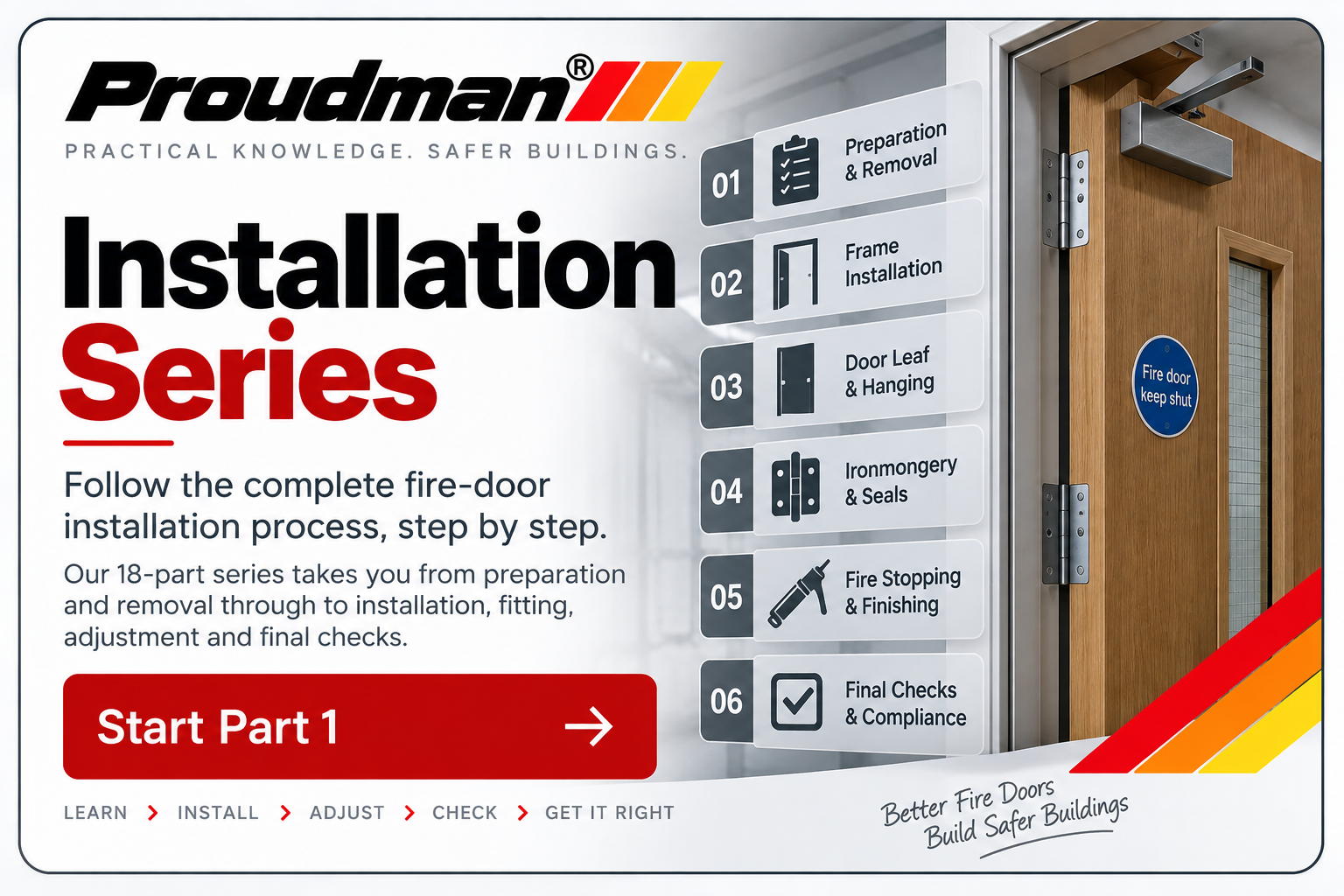
LEARN - Installation Series
MEMBER ACCESS ONLY

FIND - Find a Subject
FREE ACCESS
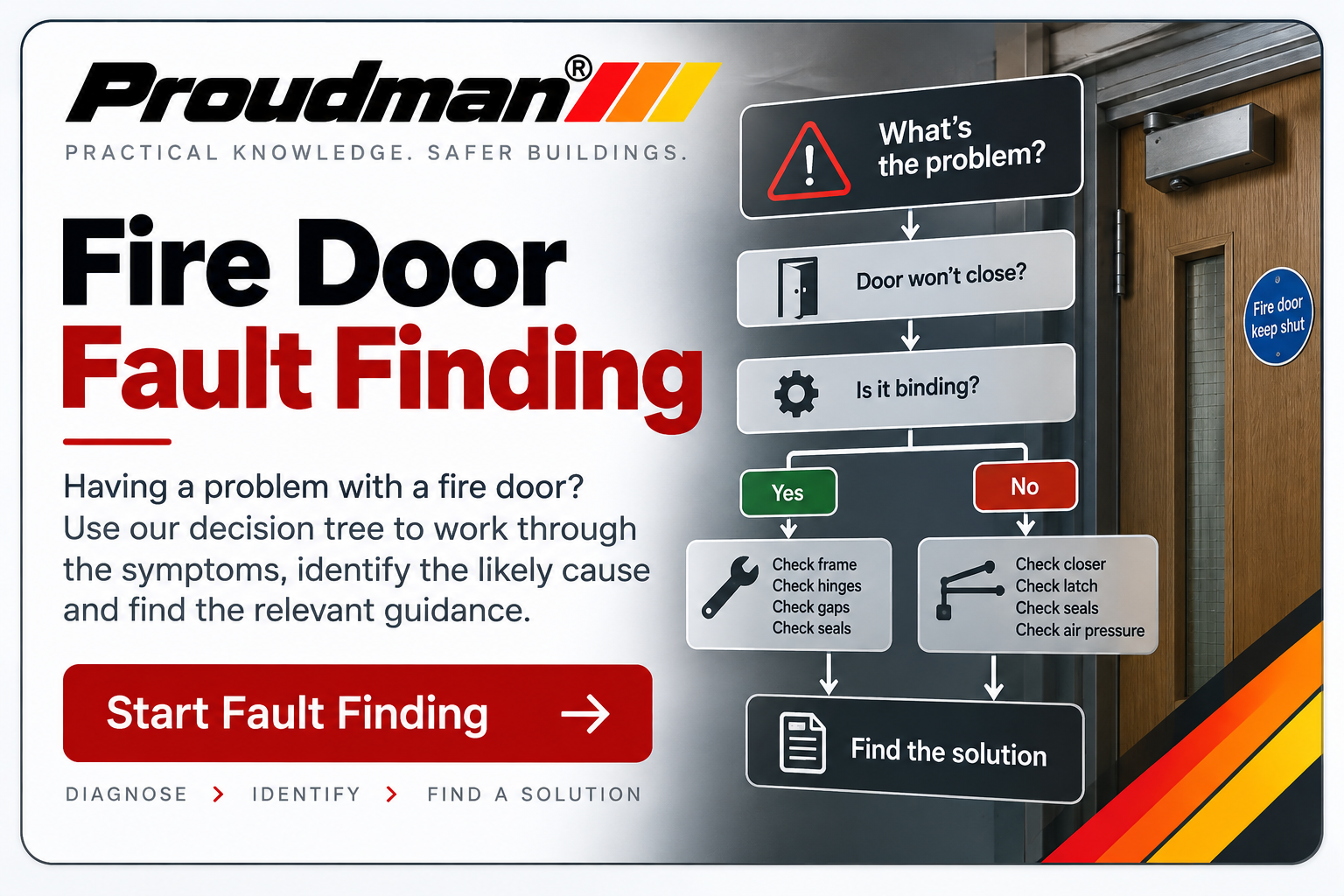
FIX - Fire Door Fault Finding
MEMBER ACCESS ONLY
Latest Articles
How to Apply Fire Stopping Mastic Around Uneven Fire Door Frame Gaps
Published: October 11, 2026
Fire Door Mastic Nozzle Problems: Too Much, Too Little or the Wrong Bead
Published: October 11, 2026
What Happens When Fire Door Mastic Is Applied in the Wrong Place?
Published: October 11, 2026
How to Tool Fire Door Mastic Without Pulling It Out of the Joint
Published: October 11, 2026
How to Produce a Consistent Fire Door Mastic Bead Around a Frame
Published: October 11, 2026
Why a Standard Mastic Nozzle Can Be Difficult to Control Around Fire Door Frames
Published: October 11, 2026
Why Fire Door Mastic Gets Messy — and What the Mess Is Telling You
Published: October 11, 2026
How to Apply Fire Door Frame Mastic Without Losing Control of the Bead
Published: October 11, 2026
What Should You Check Before Cutting or Routing a Fire Door?
Published: October 11, 2026
How Do You Assess Fire Door Leaf Damage Before Repair?
Published: October 11, 2026
How Should Fire Door Maintenance History Be Used in Diagnosis?
Published: October 11, 2026
Why Can a Repaired Fire Door Fault Keep Returning?
Published: October 11, 2026

How Should Temperature and Humidity Changes Be Investigated?
Published: October 11, 2026

How Do You Check Fire Door Threshold and Floor Clearance?
Published: October 11, 2026
New Access Control on a Fire Door: Follow the Evidence Before You Drill
Published: October 9, 2026
The Old Lock Mortice Tells a Story: What Previous Hardware Work Can Reveal
Published: October 9, 2026
Why Does a Fire Door Bind at the Bottom When the Floor Looks Fine?
Published: October 9, 2026
Read the Meeting Stile: What the Top, Middle and Bottom Are Telling You
Published: October 9, 2026
Door Selector Fault or Closer Fault? A Pair Test That Saves Guesswork
Published: October 9, 2026
Double Fire Doors: How to Find the Leaf That Should Arrive First
Published: October 9, 2026
Backcheck: How to Tell Deliberate Resistance From a Closing Fault
Published: October 9, 2026
Why Does a Fire Door Closer Shoe Come Loose After Repair Work?
Published: October 9, 2026
The Door Closer Started Fouling After New Architrave Was Fitted
Published: October 9, 2026
The Same Closer Can Behave Differently on Two Fire Doors
Published: October 9, 2026
Three Hinges, Three Constraint Points: How the Leaf Is Actually Being Held
Published: October 9, 2026
How to Rebuild the Hinge Reference From an Existing Fire Door
Published: October 9, 2026
Replacing All Three Hinges: How to Avoid Changing the Door’s Geometry
Published: October 9, 2026
Hinge Screws: Why Seating and Overtightening Deserve a Check
Published: October 9, 2026

Same Hinge Size, Different Geometry: Why Manufacturer Changes Can Matter
Published: October 9, 2026
Impact Routes: Using Site Traffic as Evidence of Fire Door Damage
Published: October 9, 2026
Bow, Rack or Twist? Three Different Ways a Fire Door Frame Can Move
Published: October 9, 2026
The Heavy Door Left Open: How Hinge Loading Can Move a Frame
Published: October 9, 2026
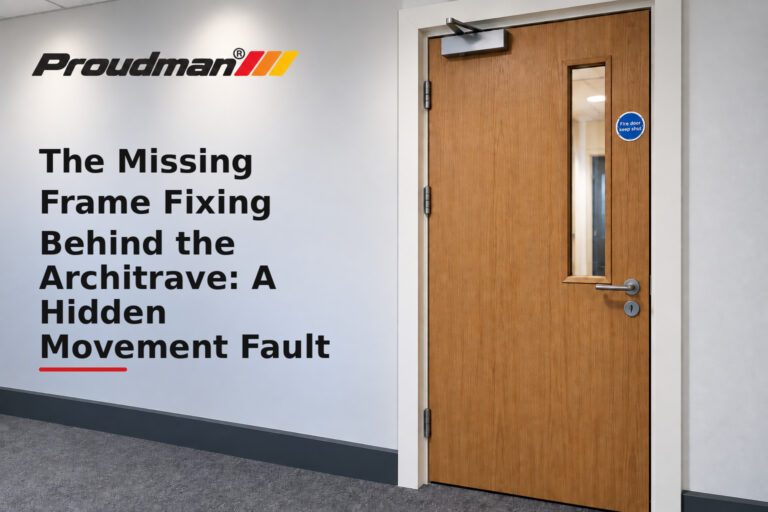
The Missing Frame Fixing Behind the Architrave: A Hidden Movement Fault
Published: October 9, 2026
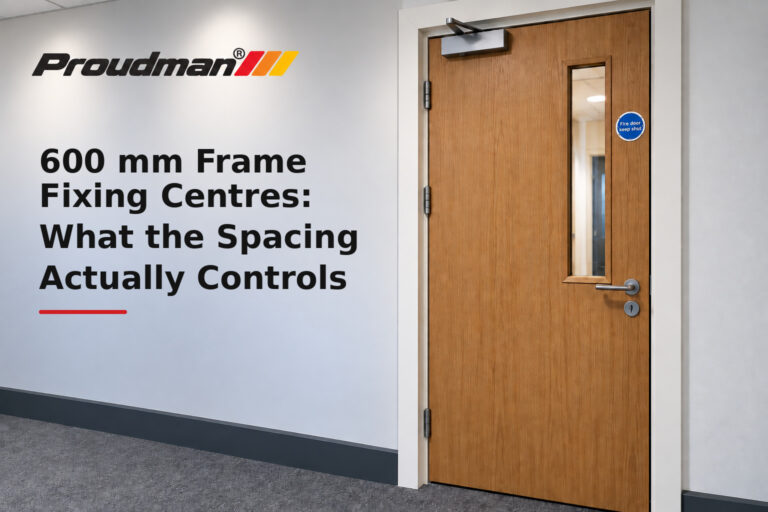
600 mm Frame Fixing Centres: What the Spacing Actually Controls
Published: October 9, 2026
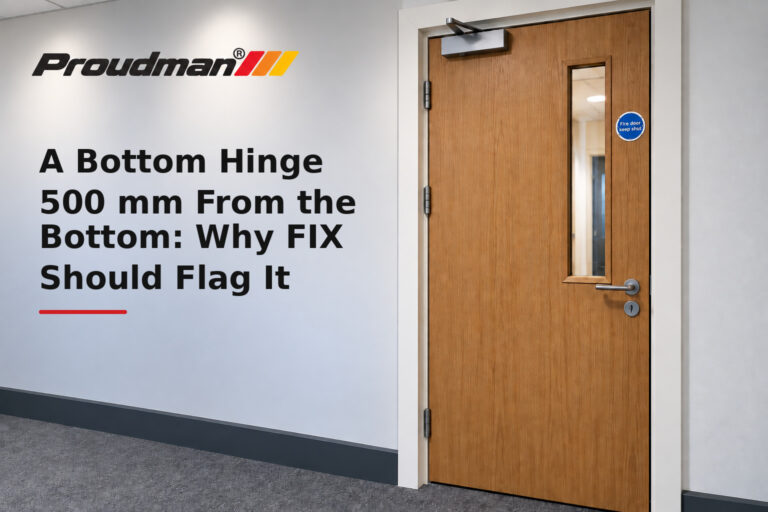
A Bottom Hinge 500 mm From the Bottom: Why FIX Should Flag It
Published: October 9, 2026
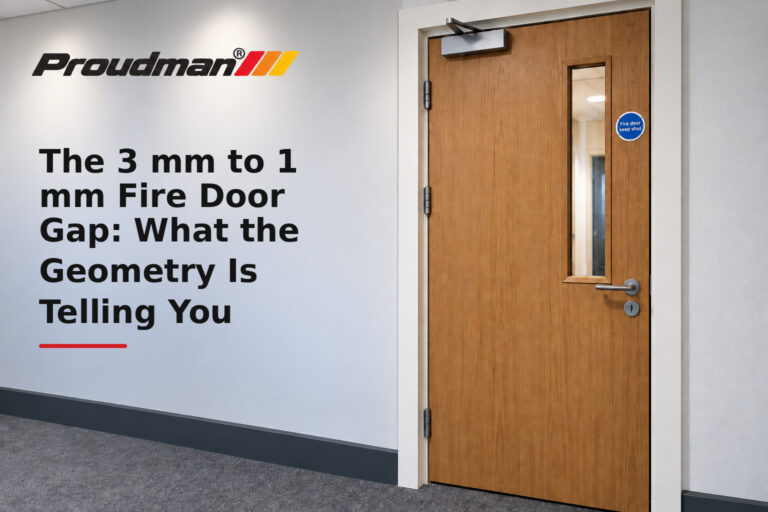
The 3 mm to 1 mm Fire Door Gap: What the Geometry Is Telling You
Published: October 9, 2026
Why Does Proud Replacement Lipping Make a Fire Door Bind?
Published: October 6, 2026
Why Does a Fire Door Closer Arm Slip or Change Position?
Published: October 6, 2026
Why Is a Fire Door Seal Painted Over or Damaged?
Published: October 6, 2026
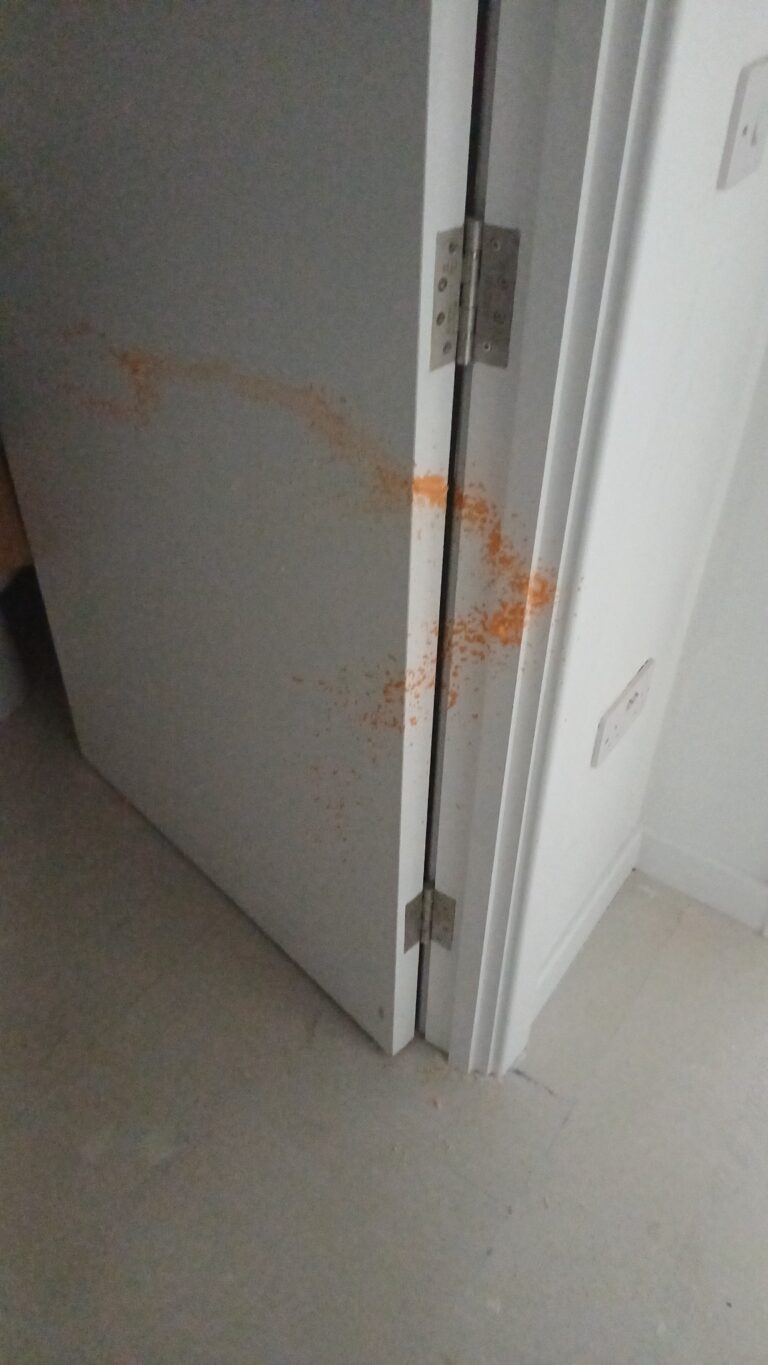
Expanding Foam Accidents During Fire Door Installation: What Can Go Wrong
Published: October 6, 2026
Why Does a Fire Door Gap Change from Top to Bottom?
Published: October 6, 2026
Why Does a Fire Door Seal Bunch Up or Sit Unevenly?
Published: October 6, 2026
How Should You Measure Fire Door Gaps for Fault Finding?
Published: October 6, 2026
Why Does a Fire Door Gap Change When the Frame Is Loaded?
Published: October 6, 2026
Why Does a Fire Door Change When the Temperature or Humidity Changes?
Published: October 6, 2026
Why Does a Fire Door Seal Joint Fail at the Corner?
Published: October 6, 2026
Why Is Fire Door Lipping Loose or Damaged?
Published: October 6, 2026
Why Does a Fire Door Catch on the Lock Strike Plate?
Published: October 6, 2026
Why Does a Fire Door Start Rubbing After Hinge Work?
Published: October 6, 2026

Why Is a Fire Door Harder to Open After New Seals?
Published: October 6, 2026
Fire Door Maintenance Costs: What Happens When 320 Doors Fail?
Published: October 4, 2026
Fire Door Alterations: What Should You Check Before Drilling, Cutting or Replacing Components?
Published: October 3, 2026
Fire Door Frame Damage: When Fixing the Gap Creates Another Problem
Published: October 2, 2026
Fire Door Surveys: Why the Survey Structure Matters as Much as the Inspection
Published: October 1, 2026
Fire Door Frame-to-Wall Fire Stopping: What You Can and Can’t See
Published: September 30, 2026
When the Building Changes but the Fire Strategy Doesn’t
Published: September 29, 2026
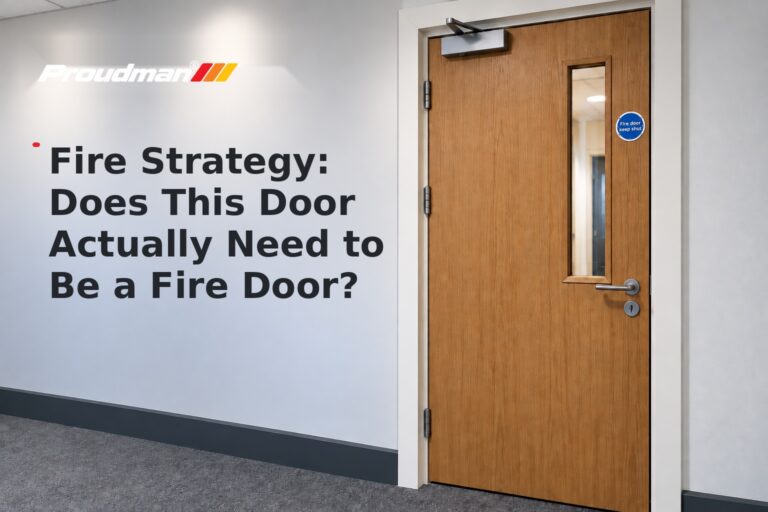
Fire Strategy: Does This Door Actually Need to Be a Fire Door?
Published: September 28, 2026
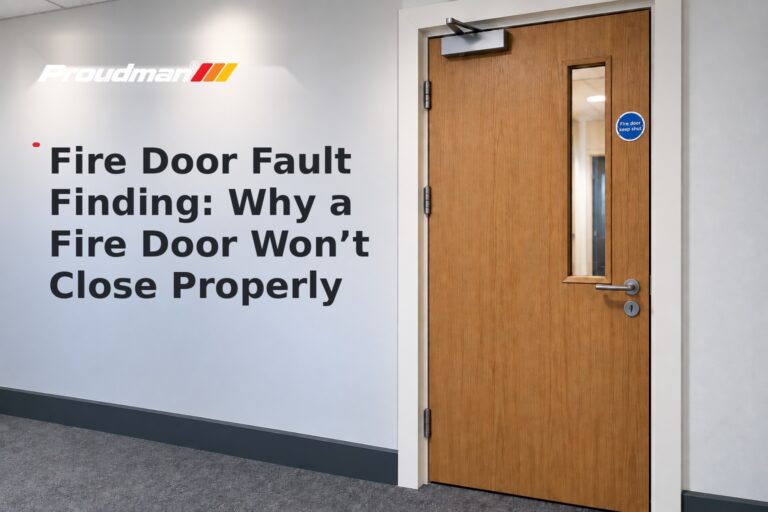
Fire Door Fault Finding: Why a Fire Door Won’t Close Properly
Published: September 27, 2026
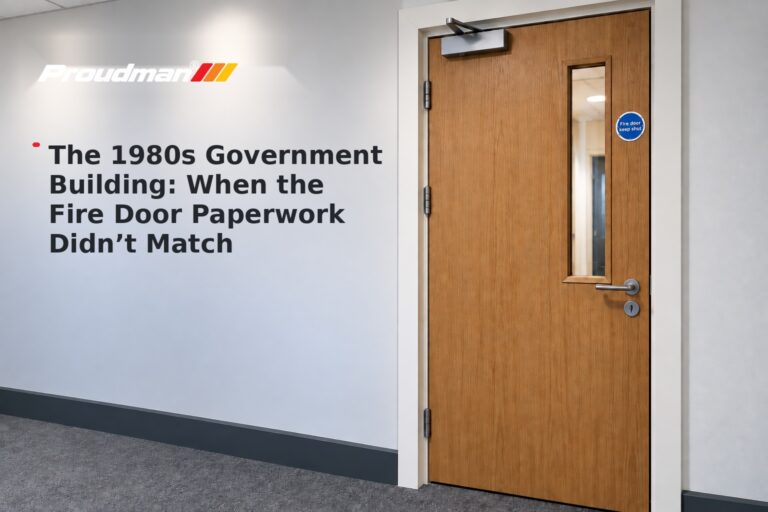
The 1980s Government Building: When the Fire Door Paperwork Didn’t Match
Published: September 27, 2026
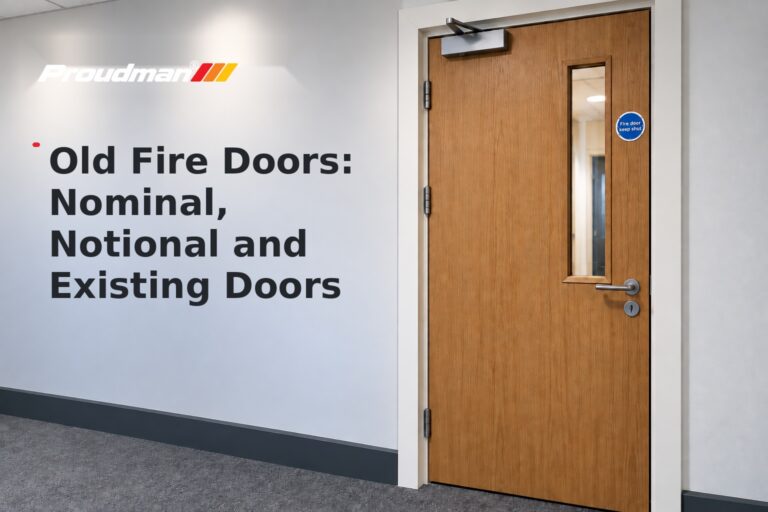
Old Fire Doors: Nominal, Notional and Existing Doors
Published: September 27, 2026
Fire Door Certification: What Does the Certification Actually Prove?
Published: September 27, 2026
How to Identify an Existing Fire Door Before You Alter It
Published: September 27, 2026
Fire Door Closers Explained: How They Work, How to Check Them & Common Problems
Published: September 25, 2026
Fire Door Hinges Explained: Installation, Inspection & Common Problems
Published: September 24, 2026
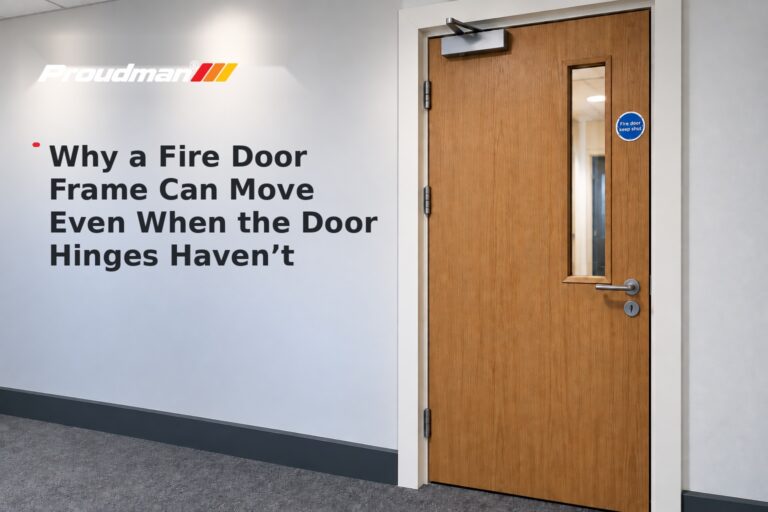
Why a Fire Door Frame Can Move Even When the Door Hinges Haven’t
Published: September 22, 2026
Why Fire Door Frames Move: Understanding the Engineering Behind Doorset Movement
Published: July 19, 2026
What Is a Fire Doorset? Components, Testing and International Guidance
Published: July 18, 2026
Fire Door Frames Explained | Installation, Inspection & Common Problems
Published: July 16, 2026
Fire Door Installation Guidance: From Preparation to Handover
The Knowledge Centre brings together practical guidance for installing, inspecting and maintaining fire doors. The frame, fixings, packing, leaf, hinges, latch, closer, seals, glazing and wall junction work as a system. Check the doorset identity and manufacturer instructions, record deviations and make sure remedial action is supported by suitable evidence. Continue with our fire door installation guide, fault finding and Find a Subject index.
Why the Proudman Knowledge Centre Exists
The Proudman Knowledge Centre brings together practical fire door installation, inspection, maintenance and fault-finding guidance for installers, inspectors and building professionals.
Use the subject guides to find information on fire door frames, gaps and tolerances, hinges and hardware, closers, glazing, seals, fire stopping and remedial work. For step-by-step learning, explore the fire door installation series; for equipment, visit our specialist fire door tools range.
To improve fire door safety through practical knowledge, engineering principles and continuous learning.
Our Approach
Everything published within the Proudman Fire Technical Knowledge Centre follows the same principles.
- Practical experience gained from 30 years of joinery and specialist fire door work.
- Engineering principles explaining why systems perform the way they do.
- Current legislation and manufacturer guidance where appropriate.
- Practical solutions based upon real remedial work.
- Continuous updates as industry guidance develops.
Our aim is always to produce clear, accurate and unbiased technical guidance that improves understanding throughout the fire door industry.
About Eddie Proudman
The Proudman Fire Technical Knowledge Centre is researched and written by Eddie Proudman, founder of Proudman Fire.
With 30 years of joinery experience and more than 8 years specialising in fire door installation, inspection and remedial works, Eddie has worked on thousands of fire doors across commercial, residential and public sector buildings.
Rather than simply repeating standards, the Knowledge Centre explains the practical engineering behind fire doors, sharing lessons learned from real installations, inspections and remedial works to help improve workmanship throughout the industry.
Our Commitment
Every article is continually reviewed and updated as new standards, manufacturer guidance and practical experience become available.
Our commitment is to provide practical, independent technical guidance that helps improve workmanship, encourages best practice and ultimately contributes to safer buildings.
Share this:
- Share on Facebook (Opens in new window) Facebook
- Share on X (Opens in new window) X
- Share on Bluesky (Opens in new window) Bluesky
- Share on Pinterest (Opens in new window) Pinterest
- Share on Reddit (Opens in new window) Reddit
- Share on LinkedIn (Opens in new window) LinkedIn
- Share on Telegram (Opens in new window) Telegram
- Share on Threads (Opens in new window) Threads